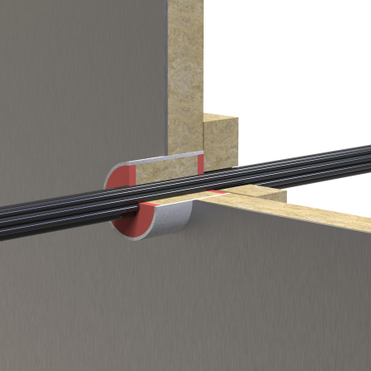


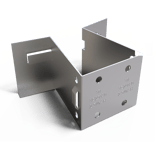

These intumescent urethane foam blocks are installed in openings by compressing and stacking into the opening in a brick-like fashion. The intumescent block expands in high temperatures to impede fire, smoke, and gas passage.
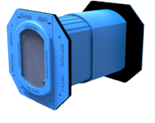
EZ-Path Series 44NEZ Smoke & Acoustical Pathway provides exceptional leakage and acoustical performance with tested and approved cable capacities ranging from 0 up to 100% visual fill
These intumescent urethane foam blocks are installed in openings by compressing and stacking into the opening in a brick-like fashion. The intumescent block expands in high temperatures to impede fire, smoke, and gas passage.
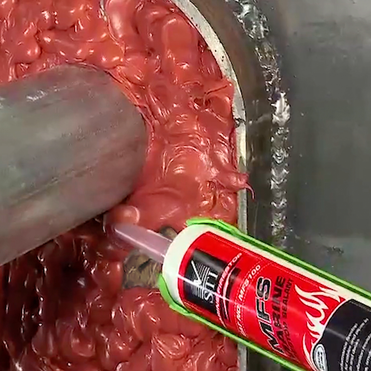
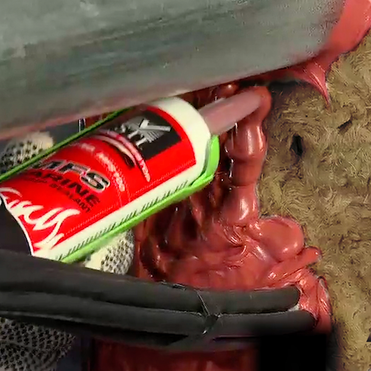
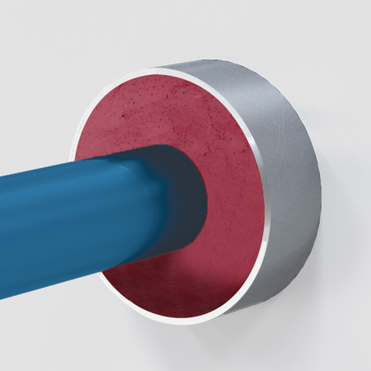
Ce mastic polymère hybride avancé durcit en présence d'humidité atmosphérique et est conçu pour les cloisons à indice de résistance au feu. Le MFS offre une meilleure résistance à l'eau que les mastics silicones conventionnels et forme un joint élastomère étanche et durable, empêchant la transmission de l'air, de la fumée et des gaz.
[Sans entretien et simple à installer, Forme des joints flexibles et résistants aux vibrations, Résistant au vieillissement et aux intempéries, Non corrosif, non conducteur]
Sans entretien et simple à installer
Forme des joints flexibles et résistants aux vibrations
Résistant au vieillissement et aux intempéries
Non corrosif, non conducteur
Applications
Ouvertures vierges
Câbles
Conduits
Tuyaux métalliques
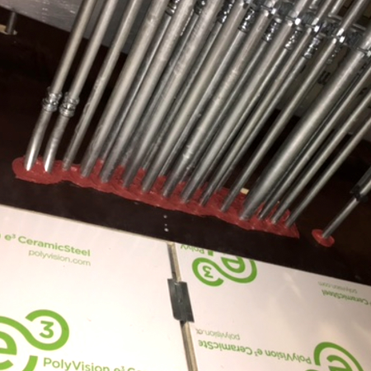
Pénétrations multiples
Tuyaux en plastique
Propriétés
Autocollant
Flexible
Léger
Faible teneur en COV
Peut être peint
Réutilisable
Barrière anti-fumée
Noise Reduction
Watertight
Specifications
Propriété
Valeur
Consistency
Paste
Percent Solids
Greater than 99.0%
VOC (ASTM D2369)
11 g/L (Less than 2%)
Tooling Time
15-20 Minutes
Tack Free (ASTM C679 @ 77F/50RH)
2-3 Hours
Storage Temperature
4°C (40°F) to 35°C (95°F)
Application Temperature
4°C (40°F) to 65°C (149°F)
Shelf Life
18 Months
Density
1.5 kg/L (12.5 lbs/gal)
Viscosity
400,000 - 600,000 cps
Ordering Information
Numéro de catalogue
Numéro UPC
Description
(UOM) Quantité
Quantité par boîte.
Poids (chacun)
Image
MFS100
730573413104
Scellant coupe-feu marin, rouge, cartouche de 281 ml
1.16 lbs
Marine Firestop Sealant (MFS) est un mastic polymère hybride avancé conçu pour être utilisé dans les divisions de classe H60, A0-A60 et B0-B30 dans la construction marine et offshore autour des pénétrations de câbles et de tuyaux. Le MFS durcit en présence d'humidité atmosphérique pour former un joint élastomère durable. Le MFS excelle dans les applications où un haut degré de résistance à l'eau est requis. Le MFS est conforme aux normes de l'Organisation maritime internationale (OMI).
Vidéo à la une
Marine Firestop Sealant (MFS) est un mastic polymère hybride avancé conçu pour être utilisé dans les divisions de classe H60, A0-A60 et B0-B30 dans la construction marine et offshore autour des pénétrations de câbles et de tuyaux. Le MFS durcit en présence d'humidité atmosphérique pour former un joint élastomère durable. Le MFS excelle dans les applications où un haut degré de résistance à l'eau est requis. Le MFS est conforme aux normes de l'Organisation maritime internationale (OMI).